Data Centre Integration with Sky-Walker
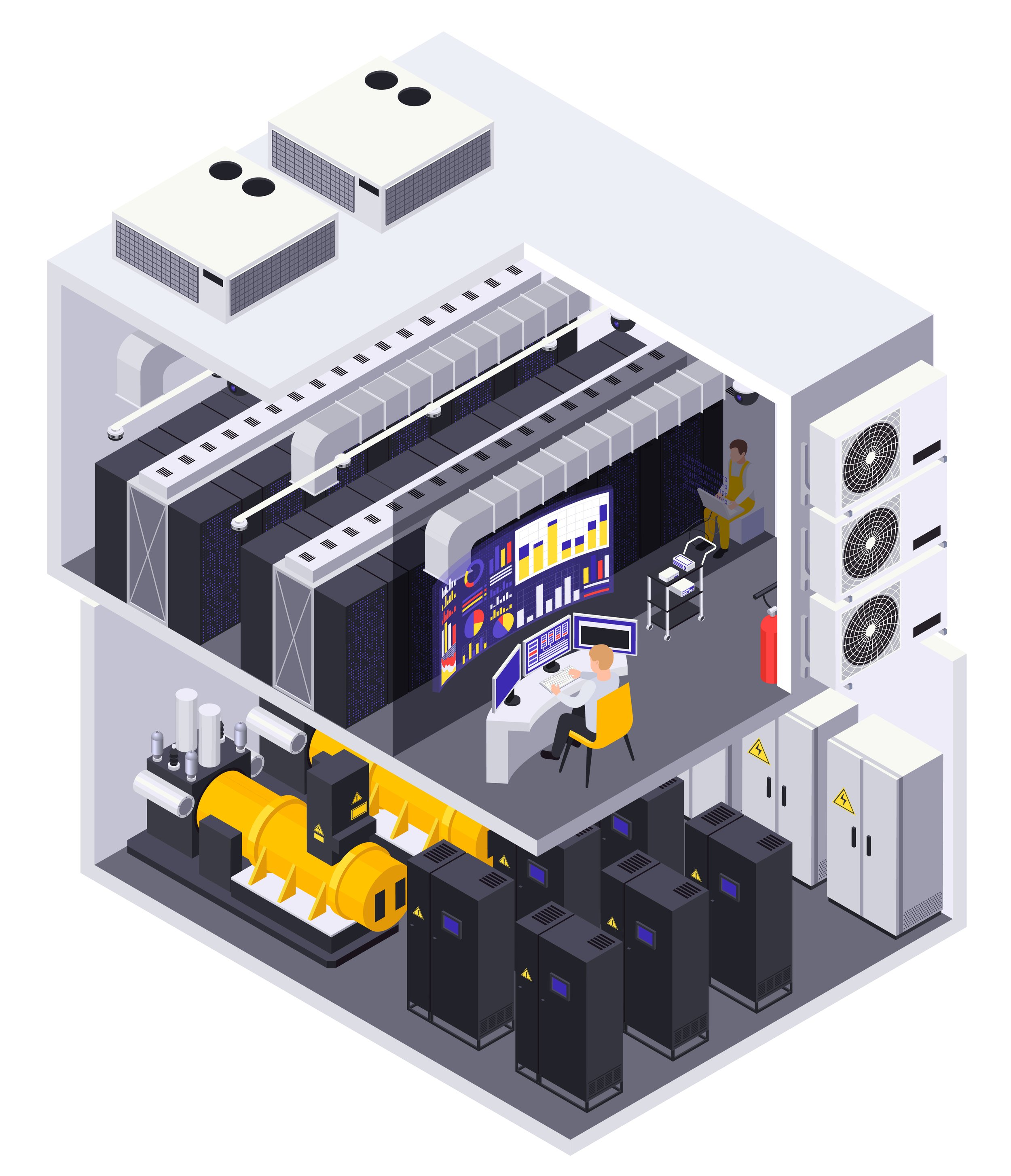
Image Credit: macrovector
Unifying Critical Infrastructure, Security, and Operations Across Single and Multi-Site Data Centres
Data centres are among the most complex, high-stakes facilities in the built environment. Whether hyperscale, enterprise, co-location, or edge, they all share the same fundamental challenge: maintaining continuous uptime in an ecosystem where hundreds of systems, sensors, and processes must operate flawlessly every second of every day.
Yet in most facilities, these systems remain siloed. Security runs one set of platforms. Facilities and engineering manage cooling, power, UPS and environmental controls through others. IT operations use their own service management tools. And executive teams rely on fragmented reporting to gauge performance and risk.
This fragmentation increases operational complexity, inflates costs, and introduces risk - especially as organisations scale or acquire new data centres.
Sky-Walker, an Open Integration Platform (OIP) and full-featured PSIM, is designed to solve these challenges. It unifies security, facilities, environmental, and operational systems across one site or dozens into a single, intelligent operating environment. For operators, managers, and executives, it creates visibility and control that traditional siloed approaches simply cannot deliver.
1. The New Reality: Why Data Centres Are Harder to Manage Than Ever
Modern data centres face a series of converging pressures:
Exponential growth in IT load
• More servers, more heat, more power, more cooling - and more room for things to go wrong.
A rising tide of security threats
• Unauthorised access attempts, insider threats, supply-chain vulnerabilities and compliance obligations require higher levels of situational awareness.
Massive complexity across electrical and cooling systems
• UPS, generators, PDUs, switchboards, CRAC/CRAH units, chillers, cooling towers, leak detection - each generating real-time operational data.
Fragmented legacy technologies
• Different vendors across sites. Multiple generations of equipment. Proprietary interfaces. Minimal interoperability.
Growth through acquisition or new builds
• Mergers, expansions, and greenfield developments create inconsistent operational environments that must be standardised quickly.
Limited visibility across multi-site portfolios
• Each site runs differently.
• Each site reports differently.
• And each site escalates differently.
These challenges create operational drag and increase the likelihood of incidents that affect availability, SLA performance and business continuity.
2. The Integration Gap: Why Traditional Tools Fall Short
Most data centres attempt to solve these issues with:
BMS platforms to manage environmental and mechanical systems
Security systems for access control, CCTV and alarms
Independent monitoring systems for UPS, power, fire, HVAC and leak detection
Manual processes that fill the gaps between systems
The result is an operational environment that is complex, reactive, and highly dependent on individual operator experience.
Critical information is distributed, response times slow, and cross-system correlations are almost impossible to identify in real time.
This is where Sky-Walker becomes a force multiplier.
3. Sky-Walker: A Unified Platform for Total Data Centre Awareness
Sky-Walker Integration Foundations
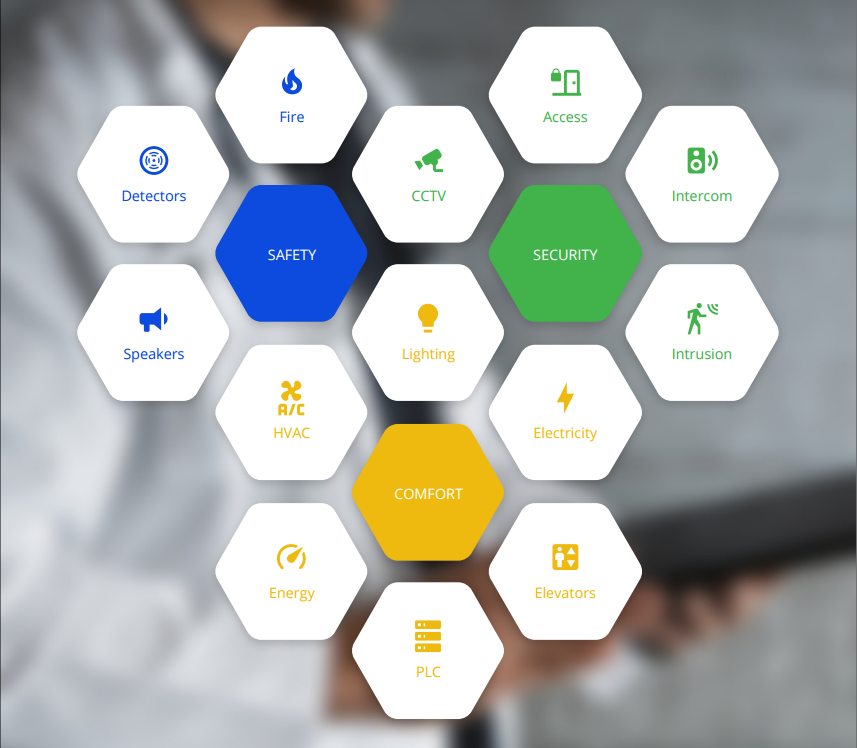
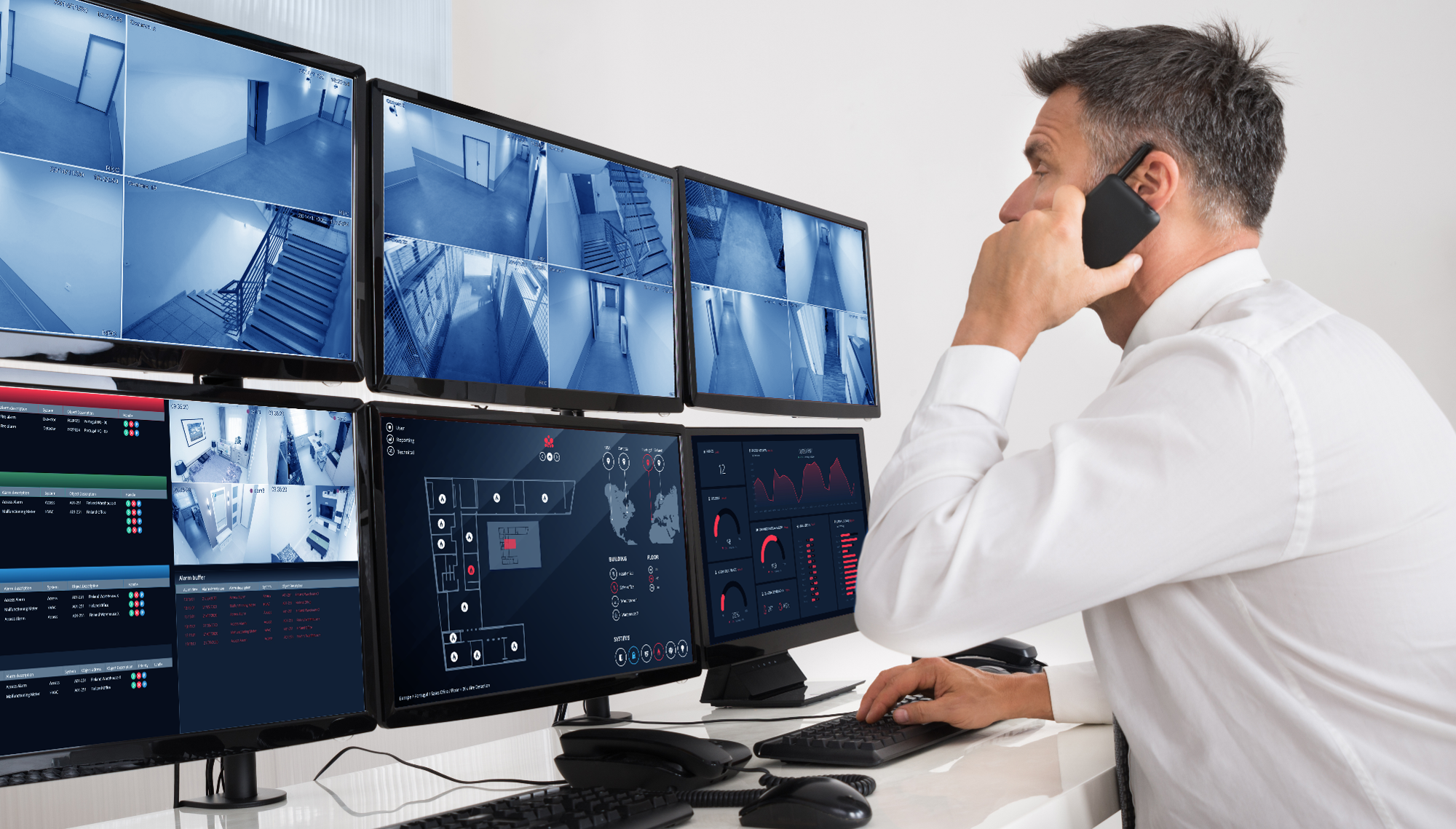
Sky-Walker consolidates every major system in a data centre - security, power, cooling, fire, environmental, operational and IT service workflows - into a single platform.
It supports virtually any technology, any vendor, and any protocol, making it ideal for both brownfield retrofits and greenfield construction.
Typical integrations include:
Security Systems
Access control
Biometrics & high-security airlocks
CCTV & VMS
Perimeter detection & fence monitoring
Intrusion systems
Visitor, contractor & induction systems
License plate recognition for deliveries and logistics
Critical Infrastructure & Facilities
UPS, PDU, generator & switchboard monitoring
BMS / HVAC
Cooling plants (CRAC, CRAH, chillers, cooling towers)
Leak and flood detection
Fire panels, VESDA & suppression systems
Environmental sensors: temperature, humidity, pressure, airflow
Operational & IT Systems
ITSM platforms (ServiceNow, Jira Service Management)
CMMS / maintenance management
Asset tracking (BLE, RFID, GPS)
Work order automation
Digital twins and modelling tools
Reporting, analytics and BI platforms
Each system contributes real-time data into Sky-Walker’s unified operational picture, providing unprecedented situational awareness.
4. Key Benefits for Stakeholders
Security Teams
All alarms and access events presented in a single interface
CCTV automatically linked to events for instant verification
Unified incident workflows that span physical security, IT and operations
Cross-site credential standardisation for multi-centre organisations
Outcome: Faster response, reduced labour, strengthened security posture.
Data Centre Operators & Facility Engineers
Real-time monitoring of power, cooling, fire, and environmental systems
Predictive analytics for early warning of thermal excursions or UPS degradation
Guided workflows during power or cooling events
Automatic ITSM and maintenance ticket creation based on live conditions
Outcome: Higher uptime, fewer surprises, and better coordination between facilities and operations.
Operations Management
Single-source dashboards for all facilities, all systems, and all incidents
Performance trend analysis and compliance reporting
Standardised procedures across all data centres
Reduced fragmentation from legacy vendor-specific systems
Outcome: More efficient operations, improved SLA compliance, and reduced operational risk.
Executive Leadership
Portfolio-wide visibility of operational resilience, risk, and performance
Better governance over multi-site data centre environments
Lower OpEx through automation and integrated workflows
Improved ESG metrics through energy visibility and optimisation
Outcome: Stronger business continuity reduced risk exposure, and higher overall asset value.
5. Multi-Site Operations: Bringing Order to a Distributed Portfolio
Sky-Walker GIS
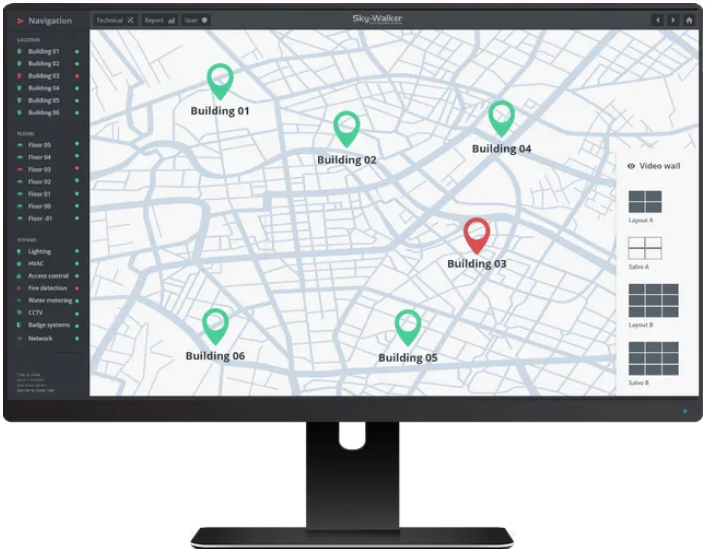
For organisations that operate multiple data centres, Sky-Walker becomes the central nervous system of the entire ecosystem.
Multi-site capabilities include:
Centralised dashboards for all data centres
Cross-site incident workflows
Standardised security and operations procedures
Live GIS visualisation of all locations
Asset-level insights across the entire fleet
Cross-site analytics for performance and risk
Regardless of equipment age, vendor, or system complexity, Sky-Walker harmonises operations, enabling executives to compare performance, risk levels, and cost profiles across every facility.
6. Brownfield Deployment: Installing Sky-Walker on Existing Sites
One of Sky-Walker’s greatest strengths is its ability to be deployed using existing services, equipment, and infrastructure.
This includes:
Legacy access control systems
Older-generation UPS, PDU, and cooling assets
Existing security cameras and VMS
Current ITSM and maintenance platforms
Proprietary or outdated BMS systems
Standalone monitoring devices
Through open APIs, field protocols, middleware connectors, and direct device integrations, Sky-Walker transforms legacy environments into unified, modernised operations, without needing expensive system overhauls.
What this means for operators
Minimal disruption
No forced vendor lock-in
Lower capital expenditure
Faster deployment timelines
Immediate value, even in decades-old facilities
7. Ready for the Future: Expandability for New Builds and Acquisitions
Sky-Walker scales effortlessly as data centres grow:
For new construction
Integrates with all new security, BMS, and critical infrastructure systems
Supports emerging technologies (AI cameras, smart sensors, robotics)
Standardises operations from day one
Enables consistent reporting and risk management across new and old sites
For acquisitions
Normalises data and operations even when the acquired site uses completely different systems
Provides executives with instant visibility into the new facility
Allows rapid consolidation of workflows, access control, and incident management
Reduces the complexity and cost typically associated with acquisition integration
Sky-Walker becomes the strategic backbone of the entire data centre portfolio - stable, consistent, and fully scalable.
8. The Strategic Impact
By unifying critical infrastructure, security, environmental monitoring, IT service management, and operational workflows, Sky-Walker delivers three core strategic advantages:
1. Operational Excellence
Real-time situational awareness reduces risk and improves uptime, response times, and decision-making.
2. Organisational Efficiency
Integrated workflows and predictive capabilities allow teams to work together more effectively with fewer manual steps.
3. Long-Term Scalability
A single platform that supports legacy systems, current operations, future builds, and portfolio expansion.
Conclusion
Data centres demand precision, reliability, and absolute visibility. Sky-Walker delivers all three by unifying all core systems, from power and cooling to security and operations into a single, intelligent platform.
Whether upgrading an existing site, standardising multiple facilities, or integrating newly built or acquired data centres, Sky-Walker transforms fragmented systems into a cohesive, resilient, and future-ready operational ecosystem.
Sky-Walker isn’t just an integration platform. It’s the operational backbone of the modern data centre.