
Beyond the Alarm: The Hidden Pressures of Modern Building Operations
The Reality of Modern Building Operations
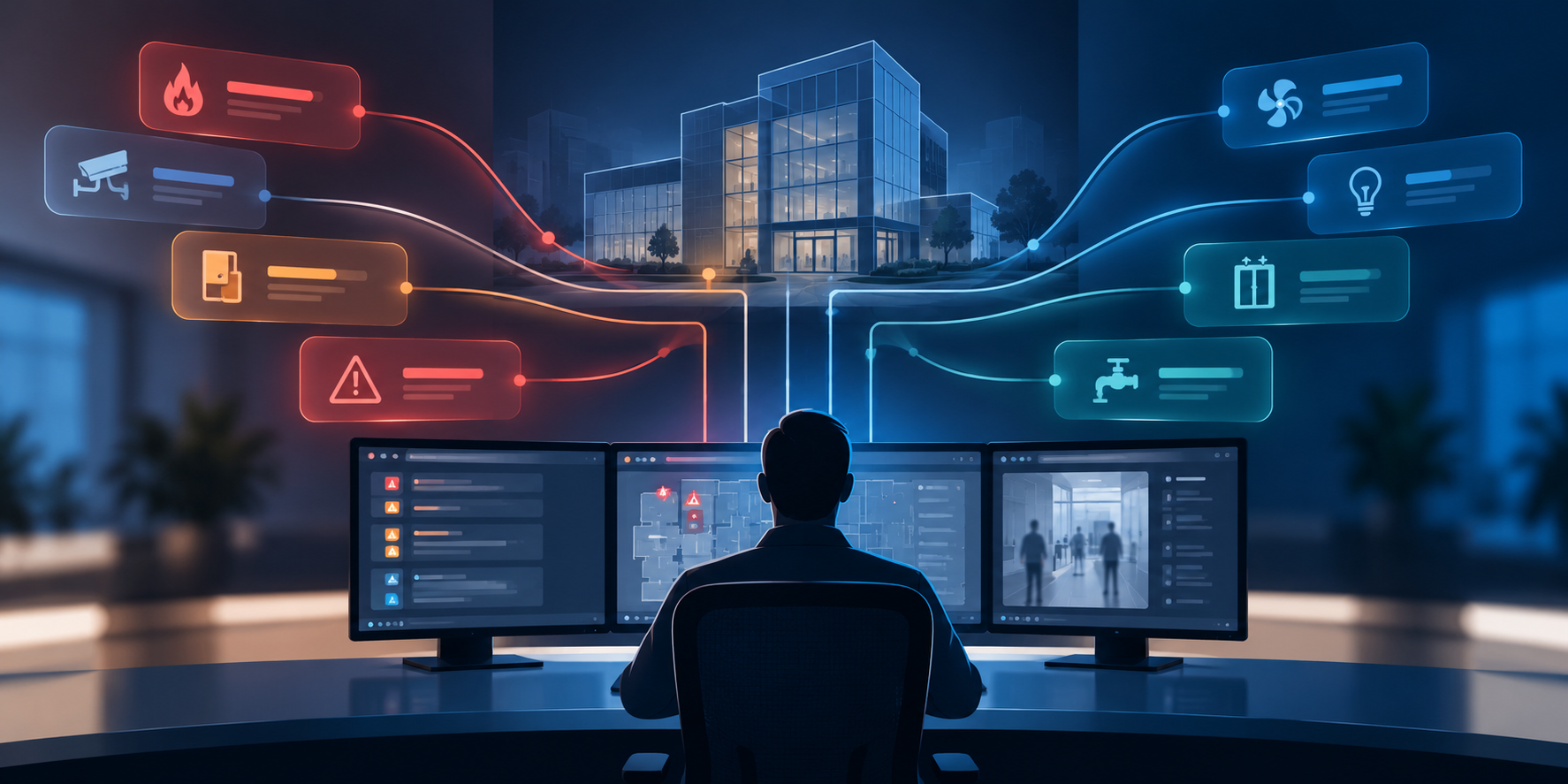
For those responsible for managing building operations, dealing with multiple events and competing priorities is part of everyday life.
A security alarm requires investigation, a building services fault needs attention, maintenance personnel are requesting access, and an intercom call is waiting. Then, without warning, a more critical event demands an immediate response.
Suddenly, the challenge is not simply acknowledging alarms or navigating different systems. It is deciding what requires attention first, coordinating the appropriate actions and ensuring that other outstanding events are not overlooked.
Every event has a purpose beyond its initial notification. A fault needs resolving, a security concern needs investigating, and a safety incident may require immediate intervention. Each has its own urgency, procedures and expected outcomes, often involving multiple people and technologies.
Modern buildings have become increasingly sophisticated, with security, safety and building systems providing greater visibility and more detailed operational information than ever before. Yet the responsibility for interpreting that information, establishing priorities and coordinating responses frequently remains with a relatively small number of operational personnel.
As more technologies and responsibilities are introduced, the demands on these individuals can grow considerably.
Maintaining situational awareness, switching between tasks, recalling procedures and making decisions under pressure all require sustained mental effort. Over the course of a shift, these demands can contribute to fatigue, reduced concentration and increased stress, particularly when operators are required to compensate for disconnected systems and fragmented processes.
The concern is not that people are incapable of managing complex operations. It is whether the environments we create are providing them with the support they need to do so effectively and sustainably.
For building owners, operators and technology consultants, this presents an important opportunity to reconsider how operational systems are designed, how events are managed and how technology can better support both operational outcomes and the wellbeing of the people responsible for achieving them.
An Alarm Is Only the Beginning
When evaluating building technologies, considerable attention is given to detection capabilities, equipment reliability and the speed at which an alarm or event can be communicated.
However, identifying an event is only the first stage of a much broader operational responsibility.
Consider an equipment fault affecting a ventilation system. The initial alarm may identify that something is wrong, but the operator must still establish its significance, investigate the cause, determine the appropriate response and coordinate any necessary intervention.
The desired outcome is not simply to acknowledge the fault. It may be to restore the equipment before environmental conditions deteriorate or business operations are disrupted.
In a hospital or critical infrastructure facility, a similar fault could require an entirely different level of urgency, depending on the services or areas affected.
Security and safety events present comparable challenges. A forced-door alarm requires investigation, not simply acknowledgement. A duress activation requires an appropriate response that considers the safety of the individual involved. A fire system activation may initiate a series of actions involving emergency procedures, communications and ongoing monitoring.
An acknowledged alarm is not necessarily a resolved event, and a resolved event does not always mean the required operational outcome has been achieved.
Between detection and resolution, there may be numerous decisions, actions and responsibilities that need to be managed.
The difficulty increases when operators are required to manage several events simultaneously.
An investigation may be interrupted by a more urgent alarm. A maintenance request may remain outstanding while attention shifts to a safety incident. An unresolved issue may need to be transferred to another operator during a shift change.
In each case, maintaining continuity becomes just as important as the initial response.
What has already been investigated? Who has been notified? Which actions remain outstanding? Has the underlying issue been resolved, or has the alarm simply been acknowledged?
When the information required to answer these questions is distributed across multiple applications, operating procedures and manual records, maintaining that continuity can become unnecessarily difficult.
The operational challenge therefore extends beyond the performance of individual technologies.
It is about ensuring that events are managed through to their appropriate outcomes, regardless of how many other demands arise along the way.
The Demands on Human Attention
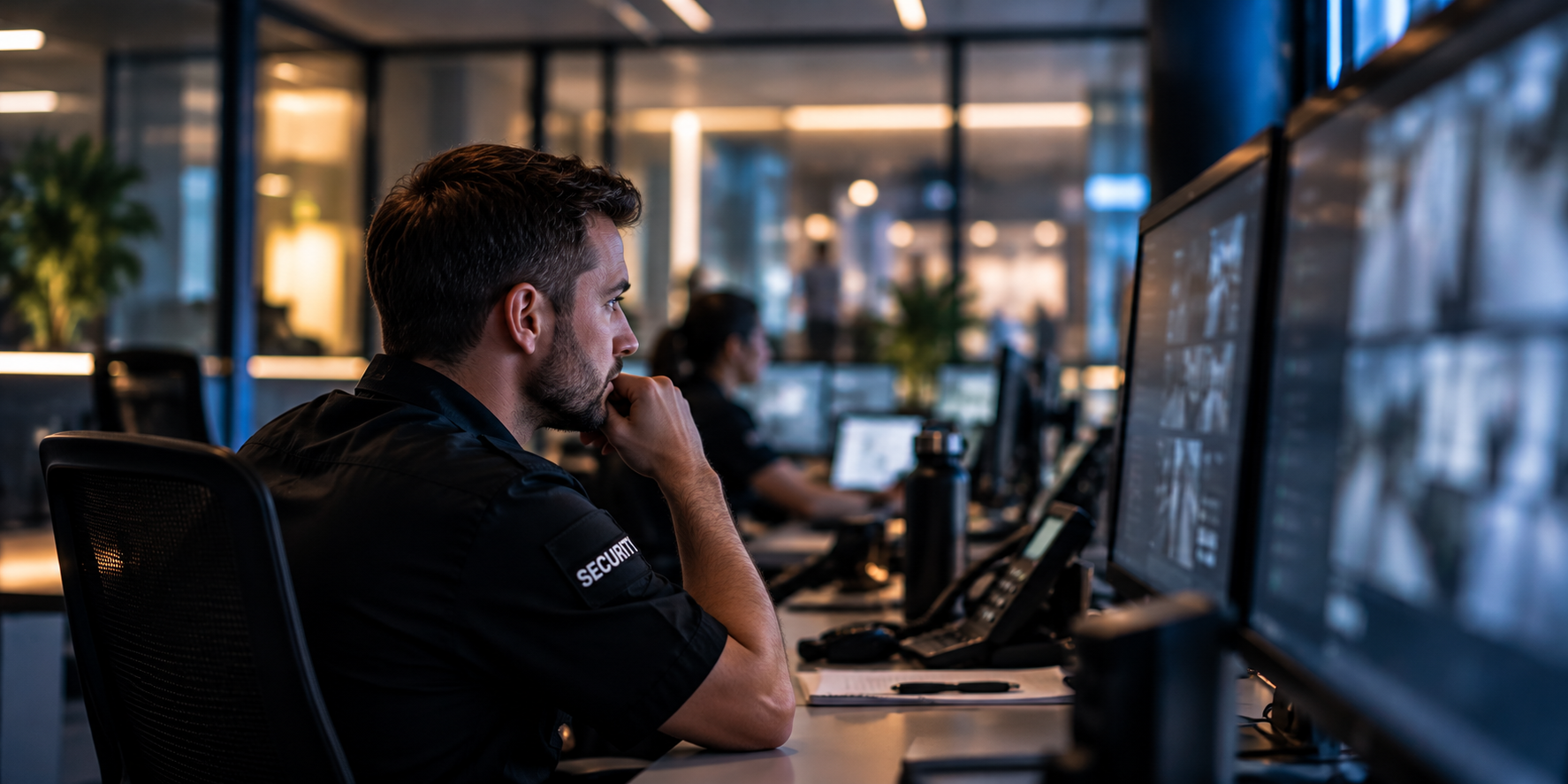
Even the most experienced operators have limitations when it comes to maintaining concentration, processing information and switching between tasks.
These limitations become particularly relevant in environments where continuous monitoring is combined with unpredictable events and competing priorities.
Research into human attention and task-switching offers valuable insight.
According to the American Psychological Association, repeatedly switching between tasks introduces cognitive costs as the brain adjusts from one activity to another. In some circumstances, these switching costs can consume as much as 40% of productive time.
While this is not a measured productivity loss across building operations, it highlights the potential inefficiencies associated with continually interrupting concentration.
A separate study published in Applied Ergonomics examined the performance of experienced and novice CCTV operators during a 90-minute surveillance task. Across the study participants, approximately 50% of specified target behaviours were detected.
Importantly, performance varied according to experience and specialisation, with some specialist operators maintaining or improving their performance over time.
Although this research should not be interpreted as suggesting that half of all real-world incidents go undetected, it illustrates the challenges associated with sustained observation and identifying relevant activity amongst continuous information.
For operational staff, these challenges are compounded by the need to interpret information from different sources.
Each application may introduce its own terminology, navigation, alarm classifications and operating procedures. Switching between these environments requires more than simply moving between screens.
The operator must establish the context of the information, recall the relevant procedures and determine the next appropriate action.
When interrupted, that mental process may need to be repeated.
Consider the effect of these interruptions across an entire shift, particularly where events remain unresolved for extended periods.
An operator may need to revisit an earlier investigation, reconstruct what has occurred, identify the actions already completed and determine what still requires attention.
The accumulation of these activities can consume valuable time and mental capacity, even when each individual task appears relatively straightforward.
This is where operational design becomes particularly important.
The objective should not be to expect operators to process more information, but to reduce the unnecessary effort required to understand what matters and determine what happens next.
Fatigue and Mental Wellbeing: The Pressure Behind the Role
One of the less visible consequences of operational complexity is the cumulative effect on the people responsible for managing it.
Working within a control room or operational monitoring environment can be mentally demanding, even when relatively little appears to be happening.
During quieter periods, operators must maintain vigilance while monitoring for unusual conditions or infrequent events.
During busy periods, they may face multiple alarms, incoming communications, requests for assistance and decisions that need to be made within a limited timeframe.
Both circumstances can place demands on concentration and mental wellbeing.
The US National Institute for Occupational Safety and Health (NIOSH) recognises that workplace fatigue can result from factors beyond inadequate sleep or extended working hours, including stress and mentally demanding tasks.
Its research identifies several potential consequences of fatigue, including reduced concentration, slower reaction times, limitations in short-term memory and impaired judgement.
These are precisely the capabilities operational personnel rely upon when prioritising events and coordinating responses.
However, there is another dimension to this challenge that is not always reflected in operational performance reports.
The responsibility carried by staff can create a significant emotional burden.
Consider an operator responding to a duress activation or emergency involving the safety of occupants. They may be required to make time-sensitive decisions, communicate with responding personnel and maintain awareness of changing conditions.
Even when the incident is managed successfully, the pressure does not necessarily disappear.
Other responsibilities remain, outstanding events must be addressed and the operator may need to document the incident while continuing to monitor the facility.
There can also be uncertainty about whether every action was completed correctly, particularly when the response required navigating several independent technologies or relying on information recalled under pressure.
Over time, repeatedly managing these demands can contribute to stress, frustration and mental exhaustion.
This is not simply a matter of individual resilience.
Safe Work Australia's guidance on psychosocial hazards recognises excessive mental demands, sustained vigilance, frequent task-switching and reliance on memory without appropriate supporting systems as factors that can contribute to workplace risks.
It is particularly relevant where errors may have significant safety, operational or financial consequences.
These considerations challenge the traditional view that operator fatigue is primarily a staffing or shift-management issue.
While appropriate resourcing, rest periods, supervision and training remain essential, the design of the operational environment also deserves attention.
When information is difficult to locate, procedures vary between systems and outstanding tasks depend heavily on individual memory, unnecessary demands can be placed on staff.
Conversely, clearer information, consistent operating procedures and reliable mechanisms for tracking events can help reduce avoidable complexity.
This does not mean technology can eliminate fatigue or prevent psychological harm. Human wellbeing is influenced by a much wider range of workplace and personal factors.
However, organisations should recognise where operational technology and processes may be contributing to unnecessary workload and consider how those conditions can be improved.
Supporting operator wellbeing should not be treated as separate from achieving good operational outcomes. The two are closely connected.
An operational environment that supports clearer decisions, better continuity and more manageable workloads can benefit both the people responsible for the facility and the organisation relying on their performance.
Designing Around Events, Not Individual Systems
If many of the challenges arise from interpreting information and coordinating responses, then improving how that information is presented and managed offers a significant opportunity.
This is where an integrated operational environment can deliver value beyond simply connecting different technologies.
An Open Integration Platform can bring together information from independent security, safety, building and operational systems within a common interface.
However, displaying every alarm in one location is not necessarily enough.
Without appropriate prioritisation, context and operational procedures, a consolidated interface could simply reproduce the same complexity within a different application.
The more meaningful opportunity is to design the operating environment around the event itself.
For example, when an access control alarm is received, relevant camera views, location information and associated procedures can be presented together, rather than requiring the operator to locate them individually.
A predefined incident workflow can guide the operator through the appropriate assessment and response, while selected actions such as notifications, escalation and documentation can be automated where the connected systems and operational procedures permit.
Importantly, the incident can continue to be managed after its initial acknowledgement.
Completed actions, outstanding tasks and the history of the response can remain available, supporting continuity when the operator is interrupted or responsibility is transferred to another person.
The same principle can apply to building services, equipment faults, safety incidents and other operational activities.
By maintaining the context of each event and supporting a consistent response process, technology can reduce the amount of information operators must manually locate, interpret and remember.
This is particularly valuable where several events are competing for attention.
Rather than relying entirely on the operator to maintain a mental record of outstanding activities, the operational environment can help track progress and provide clearer visibility of what remains unresolved.
Automation also has an important role, although it must be implemented thoughtfully.
Repetitive administrative activities and predefined notifications may be suitable for automation, while decisions involving safety, risk or operational judgement may require appropriate human oversight.
The objective is not to remove the operator from the process.
It is to reduce the time spent managing the mechanics of the process, allowing greater attention to be directed towards the decisions and outcomes that matter.
Measuring the Value of Better Operational Processes
Improving the way events are managed can create opportunities for measurable efficiency gains, particularly where routine activities are repeated throughout daily operations.
Research into human-centred interface design provides some useful evidence.
A controlled industrial study published in 2005 examined 21 professional petrochemical plant operators completing simulated abnormal operating scenarios.
The study found that operators using a human-centred interface completed the scenarios an average of 41% faster than those using a traditional interface, representing a saving of approximately 7.5 minutes per scenario.
The research also identified improvements in successfully managing equipment and process failures.
Although this study relates to industrial process control rather than building integration platforms, it demonstrates the potential benefits of designing operational interfaces around human capabilities and the activities operators need to perform.
Within building operations, opportunities for improvement can be assessed by examining routine processes and identifying activities that could be simplified or automated.
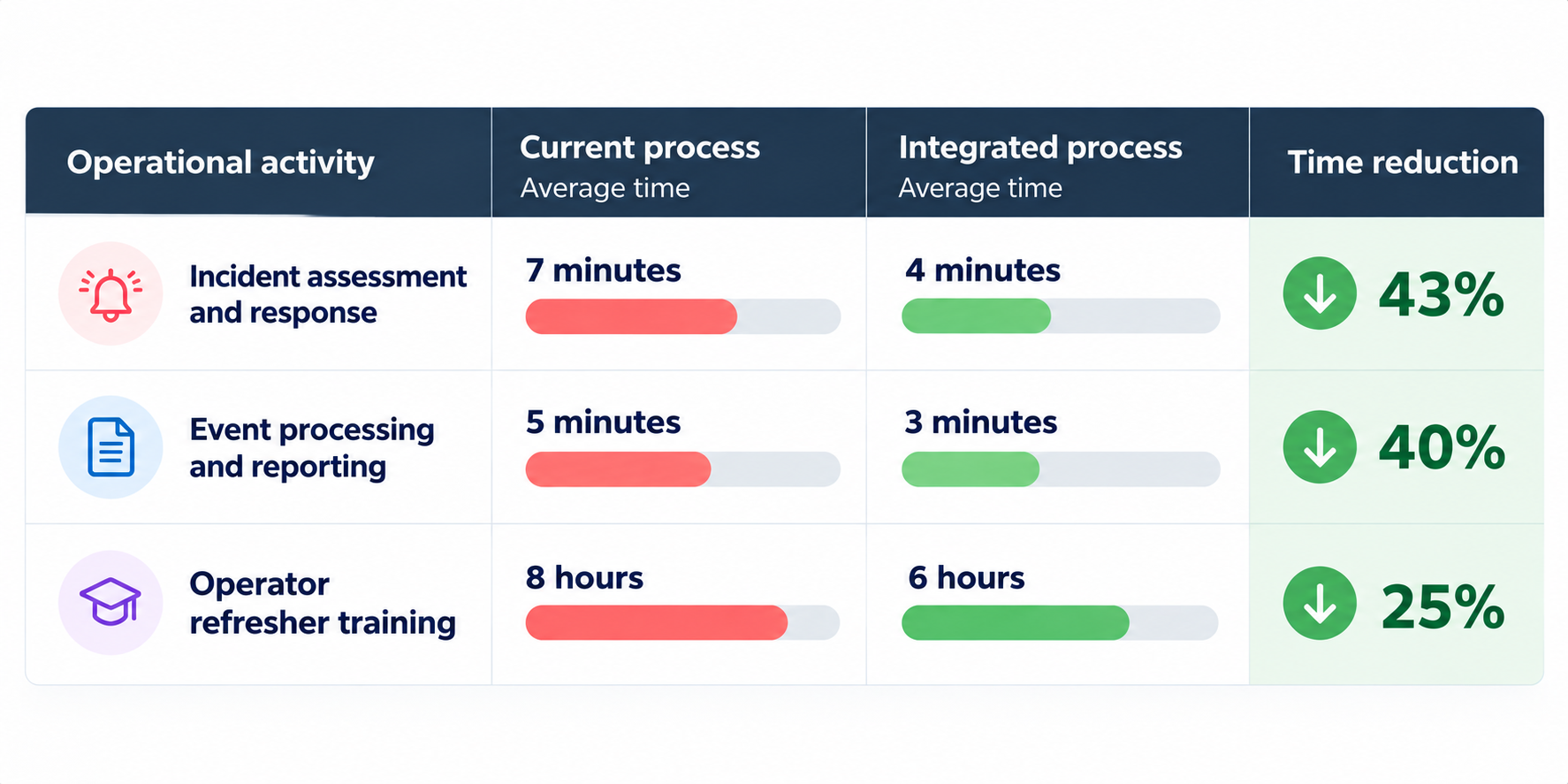
Illustrative time savings only. Actual improvements depend on existing processes, system configuration and operational requirements. These figures are not measured Sky-Walker results.
The cumulative impact of relatively small improvements can be significant.
Consider a facility that manages 20 routine events each day.
If automated workflows and improved information presentation reduced the manual handling time of each event by an average of two minutes, this would represent approximately 243 hours of operator time annually.
That equates to more than six standard 38-hour working weeks of operational capacity.
However, reducing the time spent on routine activities should not necessarily be viewed as an opportunity to reduce staffing.
There may be greater value in allowing personnel to spend more time on proactive monitoring, preventative activities, incident assessment and other responsibilities that contribute to safer and more reliable operations.
Efficiency should also be considered in terms of response quality.
A faster response is only beneficial if the necessary actions are completed correctly and the required operational outcome is achieved.
The strongest operational improvements are therefore those that combine reduced manual effort with greater consistency, visibility and accountability.
Reducing the Training Burden and Building Operator Confidence
Another important consideration is the knowledge required to manage numerous independent technologies.
Each subsystem can introduce a different user interface, alarm classification structure, reporting process and set of operating procedures.
For new personnel, becoming competent across these technologies can require substantial training.
For existing staff, software updates, changing procedures and additional systems create an ongoing need for retraining.
This can become particularly challenging for facilities operating multiple shifts, employing casual personnel or experiencing changes in staffing.
A consistent operational interface can simplify routine activities by providing a common approach to event handling and incident management, regardless of the underlying technology.
Instead of learning several different methods of investigating and processing routine events, staff can become familiar with shared operating procedures and workflows.
This can also provide valuable support during less frequent incidents.
An operator may have completed training on a particular emergency procedure months earlier without having subsequently encountered that situation.
When the event occurs, guided workflows can make relevant instructions, escalation requirements and confirmation steps available at the point of need.
This reduces reliance on memory alone and can help support more consistent responses.
Specialist technical personnel will still require appropriate knowledge of the individual subsystems they maintain or configure. However, everyday operators do not necessarily need to navigate the full technical complexity of every connected system.
The potential benefits extend beyond reductions in training hours.
Greater familiarity with a consistent operating environment can help personnel develop confidence in their responsibilities, particularly during unfamiliar or demanding situations.
And when staff are confident that important information and procedures will be available when needed, there is an opportunity to reduce some of the uncertainty associated with managing complex operational environments.
A Different Perspective on Operational Performance
As building technologies continue to evolve, there is an opportunity to reconsider how operational performance is evaluated.
Traditionally, technology investment decisions have focused heavily on functionality, reliability, compatibility and the costs associated with implementation and maintenance.
These remain essential considerations.
However, the operational impact of introducing another system, interface or process is not always assessed with the same level of attention.
Every additional technology has the potential to generate more information, introduce new responsibilities and increase the knowledge required of operational personnel.
If these demands are not considered during design and procurement, organisations may improve technical capability while unintentionally increasing the complexity of daily operations.
This raises important questions for building owners, facility managers and technology consultants.
How much time is spent investigating and processing routine events? How often are operators required to move between independent applications? What happens to an unresolved incident when attention is redirected or a shift changes?
Are response procedures consistently followed? How much training is required to maintain competency? And perhaps most importantly, how effectively does the operating environment support personnel during periods of increased demand?
These questions extend beyond the performance of individual subsystems.
They encourage organisations to examine the wider relationship between technology, operational processes and the people responsible for delivering outcomes.
Through the Sky-Walker Open Integration Platform, Integratek works to address these challenges by connecting independent technologies within a common operational environment, supported by centralised monitoring, incident management and automated workflows.
However, effective integration must begin with understanding how a facility actually operates.
The events that need to be managed, the procedures that govern them and the outcomes required should influence how technology is designed, configured and implemented.
The ability to connect systems provides the foundation. The operational value comes from what those connections enable people to achieve.
Beyond the Alarm: Rethinking What Smarter Operations Should Mean
As buildings become increasingly connected and technologically sophisticated, the way we approach their operation needs to evolve alongside them.
We have become very effective at collecting information. Building systems can detect faults, identify abnormal conditions and provide detailed visibility across operations. Yet this information is only valuable when it supports understanding, appropriate action and better outcomes.
For too long, operational complexity has been accepted as an inevitable consequence of introducing more advanced technologies. Staff are expected to learn new interfaces, accommodate different procedures and absorb additional responsibilities, often compensating for the limitations of disconnected systems.
Their ability to manage this complexity should not be mistaken for evidence that the operational environment has been designed effectively.
The next stage of smarter building operations should focus not simply on connecting more technologies, but on improving how events are managed, how decisions are supported and how operational demands affect the people responsible for achieving the required outcomes.
For building owners, operators and technology consultants, this presents an opportunity to rethink existing systems, processes and procedures, placing greater emphasis on operational efficiency, response consistency and employee wellbeing.
Importantly, meaningful improvements do not necessarily require replacing existing technologies. Often, the greatest opportunities lie in understanding how they currently operate and identifying where better integration, streamlined procedures and automated workflows could reduce unnecessary complexity.
At Integratek, we work with organisations to assess these opportunities and explore how the Sky-Walker Open Integration Platform can better connect existing technologies, simplify operational processes and support more effective event and incident management.
Contact Integratek to discuss how your existing technologies, processes and procedures could be assessed and improved through Sky-Walker.
Ultimately, the real measure of an intelligent building is not simply how much it can detect, monitor or report. It is how effectively it helps people respond, make informed decisions and achieve the outcomes that matter.